
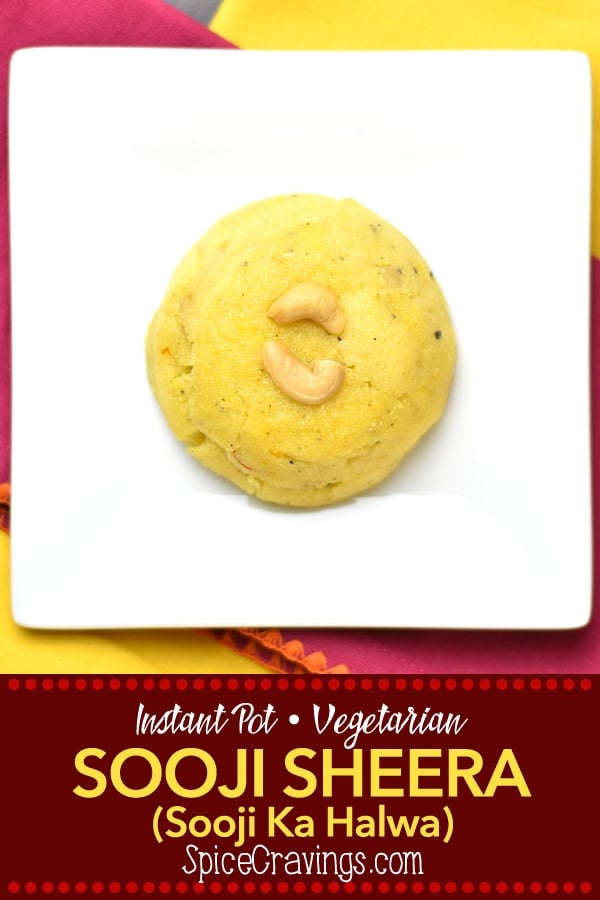
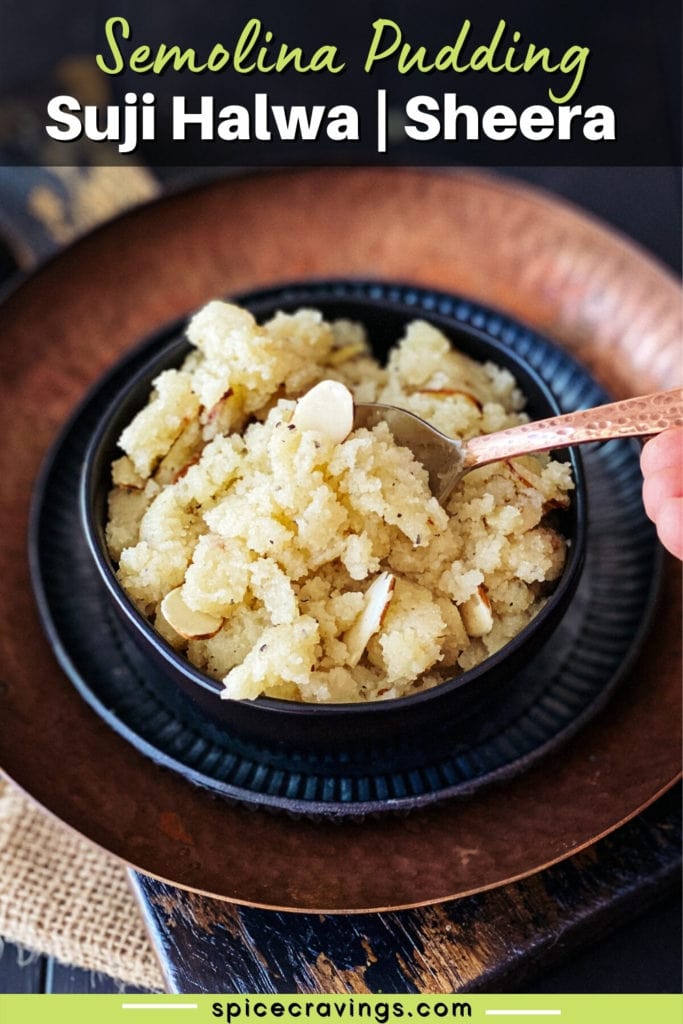

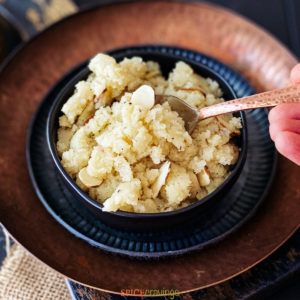
Sooji Halwa, also known as Suji Halwa, is a rich and creamy, traditional Indian pudding made with roasted semolina (suji/ sooji), ghee, sugar, milk, cardamom, and water. All you need is one pot, 5 key ingredients, and 20 minutes for this simplified, failproof recipe for an authentic halwa.
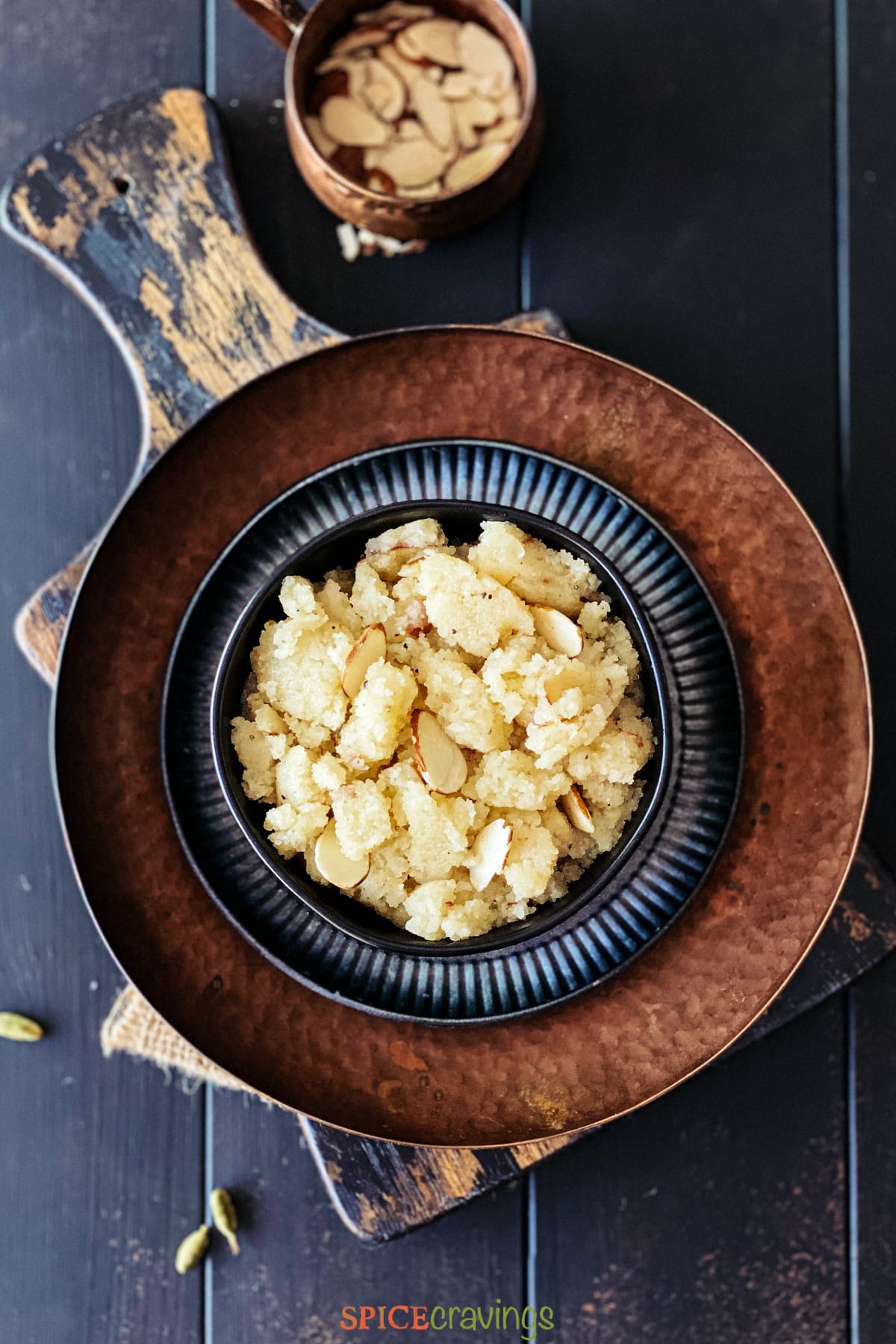
Want to save this recipe?
Sooji ka halwa is one of the few Indian desserts that can be whipped up with basic ingredients in no time, which makes it perfect for weeknight festivities.
Here's my easy 20-minute recipe with tips for making the best sooji halwa! In this recipe, I've simplified the steps to make the halwa in one pot, so there's no need to make sugar syrup separately. Let's get started!
Jump to:
What is Sooji Halwa?
Sooji Halwa (Suji Halwa), is made by roasting semolina in ghee, then cooked in water, or a combination of water and milk, and sweetened with sugar. Ground cardamom is added for a sweet-floral aroma and chopped nuts add an unparalleled texture contrast.
Ingredients- Notes & Substitutions
Here's a list of ingredients needed to make Sooji Halwa:
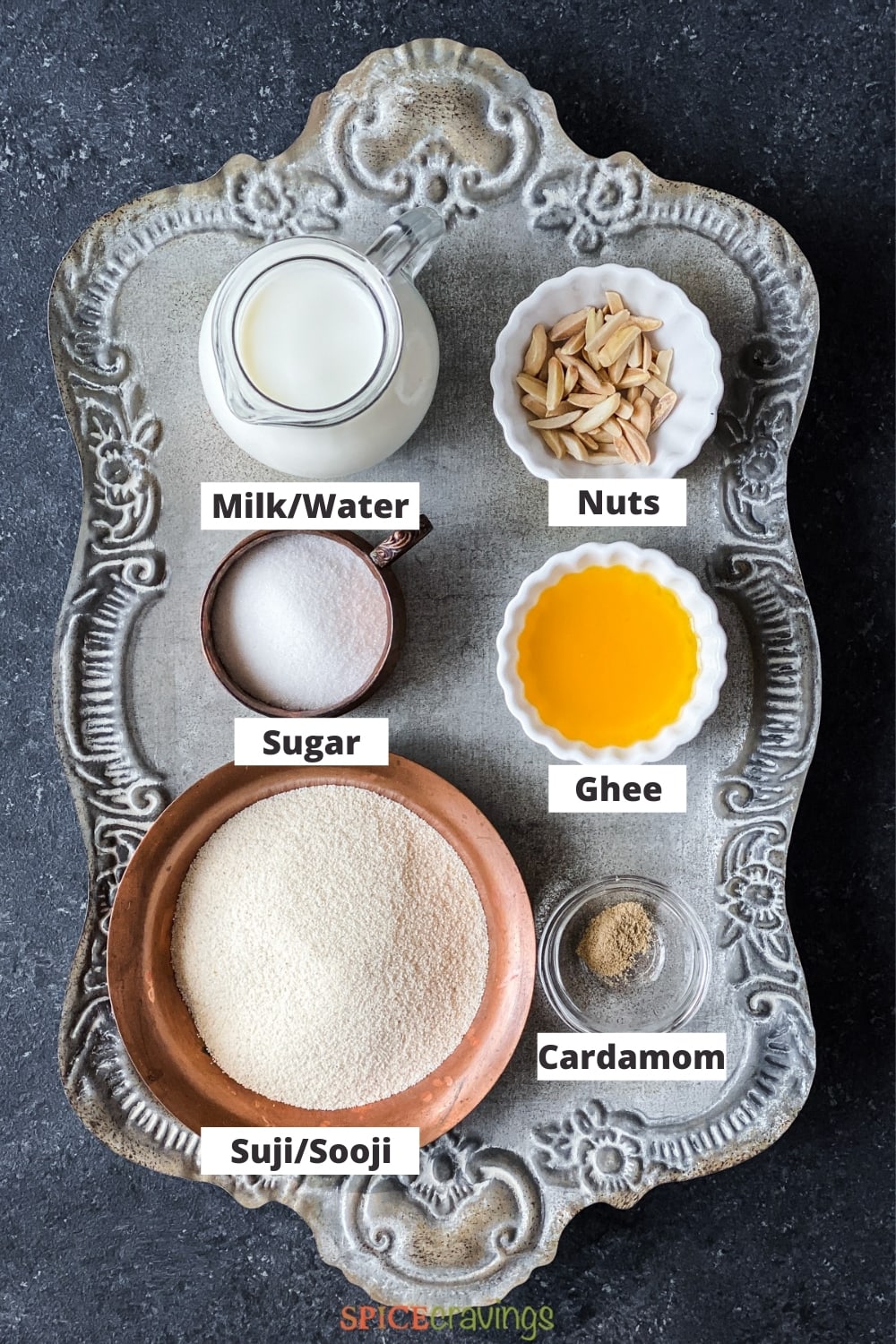
- Semolina (Suji): There are two kinds of Suji flour - fine or coarse. Even though you can use either, I prefer to use fine suji for a creamier consistency.
- Liquid: You can make this halwa entirely with water or a combination of water and milk. I do a 50-50, milk and water combination. I use 2% milk but feel free to use your preferred milk.
- Sugar: Regular granulated sugar works best in this recipe.
- Ghee or Butter: For authentic taste, I use homemade Ghee for this recipe. You can use unsalted butter as well.
- Nuts: This comes down to personal preference. I use variations of thinly sliced almonds and cashews. You can even add raisins. Their slightly sweet-tart taste adds a great flavor contrast. Nuts are optional, you can skip them to make a nut-free halwa.
- Cardamom Powder: I prefer freshly ground cardamom powder- it makes a world of difference. Use 4-5 green pods and remove their seeds. Grind them in a spice grinder or crush them using a mortar and pestle.
- Saffron: This is an optional ingredient that I use off and on. A few strands are enough for this recipe. Keep in mind though that saffron adds a yellowish tinge to the halwa.
Scroll to the recipe card for a detailed list of ingredients and quantities.
How to Make Sooji Halwa
Here is the easy stovetop recipe that gets this yummy dessert on the table in 20 minutes:
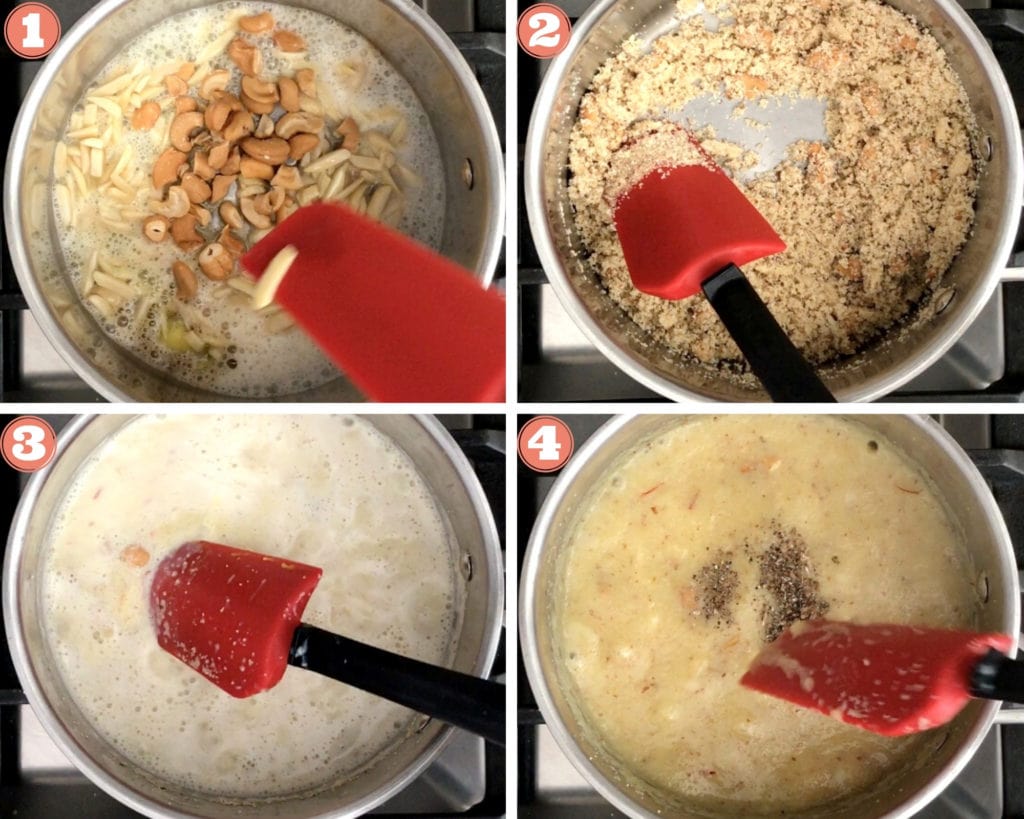
- Warm Milk & Water: Pour milk and water (or just water) into a pyrex cup and heat in the microwave for 3 minutes. If using saffron, add it to the mix. Alternatively, heat it on the stove in a saucepan. Keep aside for later.
- Roast semolina (and nuts): Heat a wide saucepan or deep skillet on medium-low heat. Add ghee (or butter) and wait for it to melt, about 20-30 seconds. If using nuts and raisins, add them and saute for 1 minute. Add sooji and roast it while stirring regularly for 6-8 minutes until the color darkens a little and you can smell a nutty aroma.
Sooji Roasting Tip: 6-8 mins results in a light-colored halwa. If you like a golden-brown color halwa, continue to roast the sooji for another 4-5 minutes while stirring continuously.
- Add liquid: Carefully and slowly add the warm milk and water mix, and stir continuously with a whisk or wooden spoon to prevent any lumps from forming.
- Add sugar: When the liquid is reduced in half (about 1-2 minutes), add sugar and stir well.
- Stir in cardamom powder: The halwa is ready when it stops sticking to the pan and reaches a thick pudding-like consistency. It will continue to thicken as it cools. If you like your halwa more dry, continue to cook for another 1-2 minutes. Turn off the heat and stir in cardamom powder.
- Rest for 5 mins: Cover the pan and rest the halwa for 5 minutes. The steam fluffs up the sooji grains and enhances the texture.
Instant Pot Halwa
Here are the step-by-step directions for the Instant Pot recipe:
- Heat Milk & Water: Pour milk and water (or just water) into a Pyrex cup and heat in the microwave for 3 minutes. Alternatively, heat it on the stove in a saucepan. Keep aside for later.
- Roast: Turn on Saute mode at 'Low/Less', add ghee, and wait for it to melt. Add suji and lightly roast it for 6-8 minutes, stirring regularly, until it smells fragrant and looks slightly darker in color. If adding nuts, add and toast with semolina.
- Add Sugar: Add sugar and mix well.
- Pressure Cook: Add the warmed liquid (water + milk) to the pot, and whisk well to prevent any lumps. Close the lid. Set the vent to 'sealing' mode and pressure cook for 4 minutes on high pressure.
- Garnish: Wait 5 minutes, then release the pressure manually (NPR 5). Open the lid once the pin drops. Stir in ground cardamom and mix well. Garnish with additional chopped nuts (if desired) and serve warm!
Serving Suggestion
Sooji halwa can be served warm or cold for dessert. You can serve it as it is, or add an extra garnish of slivered nuts on top.
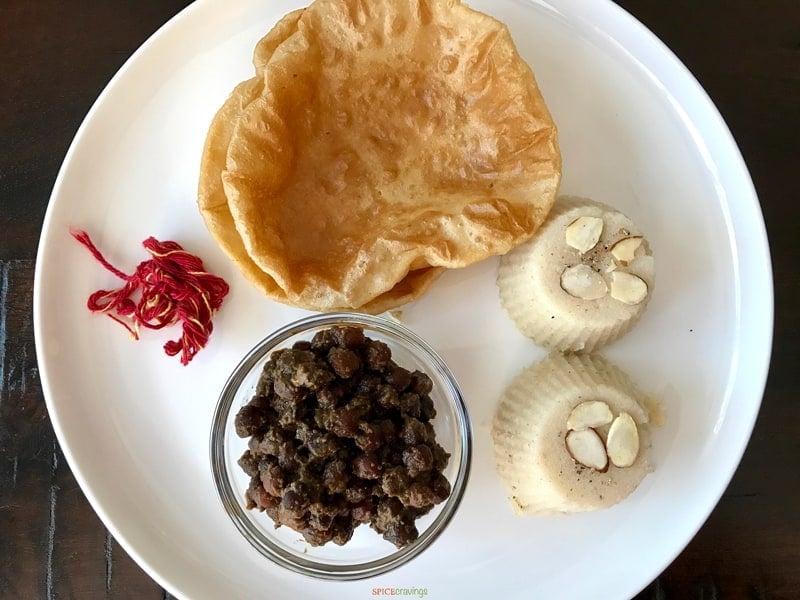
It is traditionally served as Prasad (sweet offering) on many festive occasions and Indian prayer ceremonies, called Puja. It's a must-have for Ashtami puja during the festival of Navratri and is served with puri and kala chana.
Halwa Variations
- Suji Halwa Cupcakes: To make this a fun recipe for the kids, I pour warm halwa into silicone cupcake molds and let it set for 10 minutes. After that invert it on a plate. This makes cute little cupcake-shaped suji halwa.
- Vegan Suji Halwa: To make this halwa vegan, replace the ghee with coconut oil or avocado oil. For the liquid, use water entirely or mix it up with almond milk.
- High-Protein Halwa: Replace half the semolina with super-fine almond flour and follow the same steps. If you like, reduce the ghee to 2 tablespoons since almond flour is high in fat.
- Rava Kesari: Soak 1 teaspoon saffron in 1 tablespoon of hot water. Stir it in towards the end along with sugar, and mix well until the color incorporates well.

How to Store & Freeze
Store halwa in an airtight container and refrigerate for 3-4 days. Reheat it in the microwave as needed.
You can also freeze it for up to 1 month. I recommend defrosting it in the fridge overnight and then heat as needed. If the halwa looks dry, stir in a tablespoon of hot water or milk.
Recipe Tips & Notes
- Sooji (Semolina): For a creamy consistency, use fine sooji. Always store the sooji in an airtight container in a cold, dry place, or the refrigerator so it stays fresh.
- Sooji Roasting Tip: 6-8 mins results in a light-colored halwa. If you like a golden-brown color halwa, continue to roast the sooji for another 4-5 minutes while stirring continuously.
- Water or Milk: Add the liquid as per your preference. Add a combination of milk and water for a rich flavor and texture, otherwise use plain water entirely.
- Sweetness: Adjust the sugar to your liking. Reduce the sugar to ⅓ cup for less sweetness.
- Ghee or butter: For authentic results, I make this halwa in ghee or unsalted butter. Use 4 tablespoons for regular richness, and 5 or 6 tablespoons for a richer halwa.
- Careful of splashes: When you add the warm liquid to the pan it splashes, so use a deep saucepan and a long whisk to be safe.
- End texture: For a creamy pudding-like texture, turn off the heat when halwa reaches a semi-solid state. For a grainier texture, continue to cook till it stops sticking to the pan and resembles a soft dough.
- Vegan Suji Halwa: To make this halwa vegan, skip the milk or use almond milk instead. Instead of ghee, use coconut oil or avocado oil.
- Instant pot vs Stovetop: When making this halwa for 4 servings, I prefer to make it on the stove. Instant Pot comes in handy for a larger quantity.
FAQ
Sooji Halwa translates to semolina pudding in English. Sooji is the Hindi name for semolina and refers to a coarse flour made from durum wheat. Halwa or halva, pronounced hull-waah, comes from the Arabic word 'Hulw', which means 'sweet'.
In north India, it is called Sooji Halwa or Suji ka Halwa, in Maharashtra, it is known as Sheera or Rava Sheera, and in the south, the most common variation is called Rava Kesari since it's flavored with kesar (saffron).
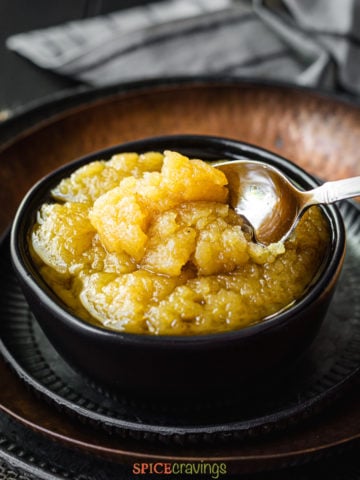
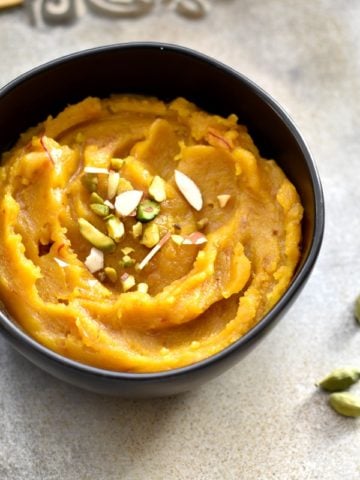
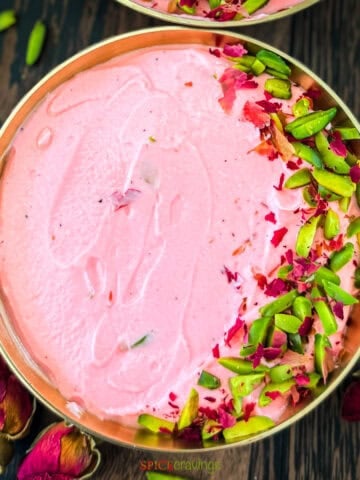
Popular Indian Halwa Recipes
Check out the complete list of Indian Desserts on the blog.
📖 Recipe
Sooji Halwa (Suji Halwa)
Want to save this recipe?
Video
Equipment
Ingredients
- 4-6 tablespoons ghee or unsalted butter (note 3)
- ½ cup fine sooji/ sooji (semolina - note 1)
- ¾ cup milk + ¾ cup water or 1½ cups water (note 4)
- ½ cup sugar
- ½ teaspoon cardamom powder 4-5 green pods
Optional Ingredients
- 2 tablespoons chopped nuts (almonds, cashews, raisins)
- 2 tablespoons almond flour optional- see notes
- ½ teaspoon saffron mixed in warm milk or water
Instructions
- Warm Milk & Water: Pour milk and water (or just water) in a pyrex cup and heat in the microwave for 3 minutes. If using saffron, add it to the mix. Alternatively, heat it on the stove in a sauce pan. Keep aside for later.
- Roast semolina (and nuts): Heat a wide sauce pan or deep skillet on medium-low heat. Add ghee (or butter) and wait for it to melt, about 20-30 seconds. If using nuts and raisins, add them and saute for 1 minute. Add sooji and roast it while stirring regularly for 6-8 minutes until the color darkens a little and you can smell a nutty aroma. (Roast another 4-5 mins for a golden-brown halwa.)
- Add liquid: Carefully and slowly add the warm milk and water mix, and stir continuously with a whisk or wooden spoon to prevent any lumps from forming.
- Add sugar: When the liquid is reduced in half (about 1-2 minutes), add sugar and stir well.
- Stir in cardamom powder: The halwa is ready when it stops sticking to the pan and reaches a thick pudding-like consistency. It will continue to thicken as it cools. If you like your halwa more dry, continue to cook for another 1-2 minutes. Turn off the heat and stir in cardamom powder.
- Rest for 5 mins: Cover the pan and rest the halwa for 5 minutes. The steam fluffs up the sooji grains and enhances the texture. Serve warm or cold, as it is, or garnish with slivered nuts.
Notes
- Sooji (Semolina): For a creamy consistency, use fine sooji. Always store the sooji in an airtight container in a cold, dry place, or the refrigerator so it stays fresh.
- Sooji Roasting Tip: 6-8 mins results in a light colored halwa. If you like a golden-brown color halwa, continue to roast the sooji for another 4-5 minutes while stirring continuously.
- Ghee or butter: For authentic results, I make this halwa in ghee or unsalted butter. Use 4 tablespoons for regular richness, 5 or 6 tablespoons for a richer halwa.
- Water or Milk: Add the liquid as per your preference. Add a combination of milk and water for a rich flavor and texture, otherwise use plain water entirely.
- Sweetness: Adjust the sugar to your liking. Reduce the sugar to ⅓ cup for less sweet.
- Careful of splashes: When you add warm liquid to the pan it splashes, so use a deep sauce pan and a long whisk to be safe.
- End texture: For a creamy pudding-like texture, turn off the heat when halwa reaches a semi-solid state. For a grainer texture, continue to cook till it stops sticking to the pan and resembles a soft dough.
- Vegan Suji Halwa: To make this halwa vegan, skip the milk or use almond milk instead. Instead of ghee, use coconut oil or avocado oil.
- Instant pot vs Stovetop: When making this halwa for 4 servings, I prefer to make it on the stove. Instant Pot comes in handy for a larger quantity.
Nutrition
This recipe has been updated and republished with new photos, process shots, and tips.


Leave a Reply