
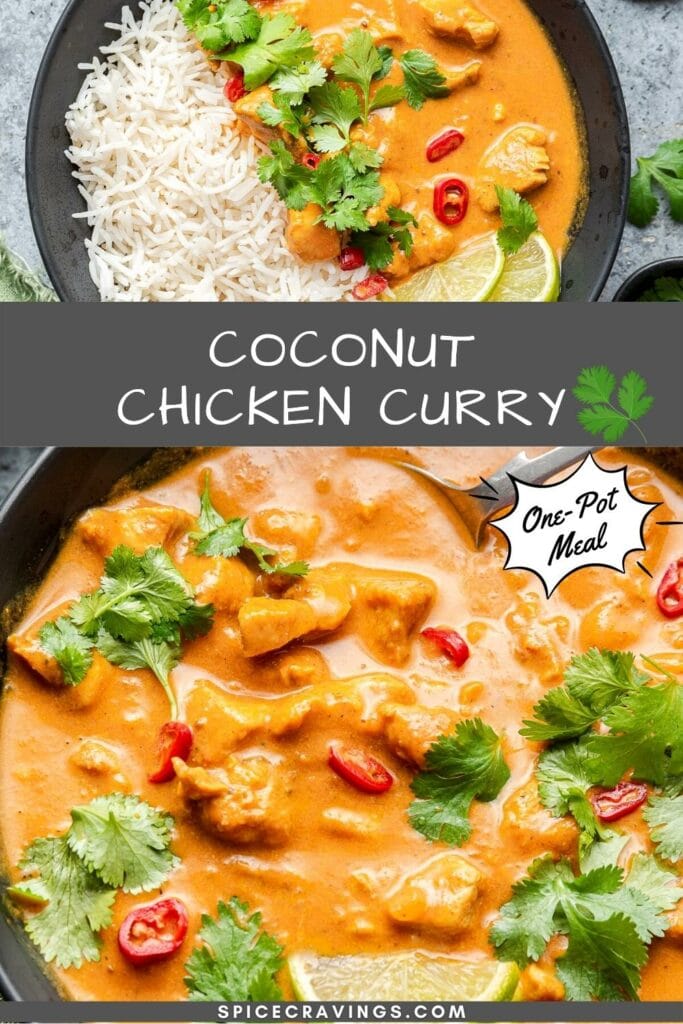
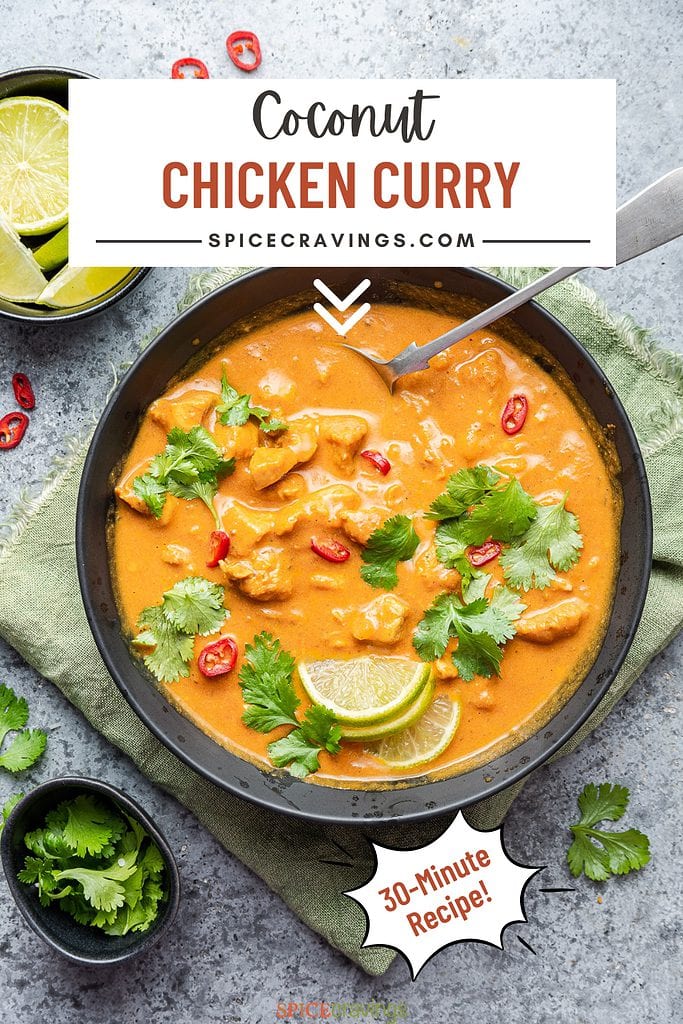
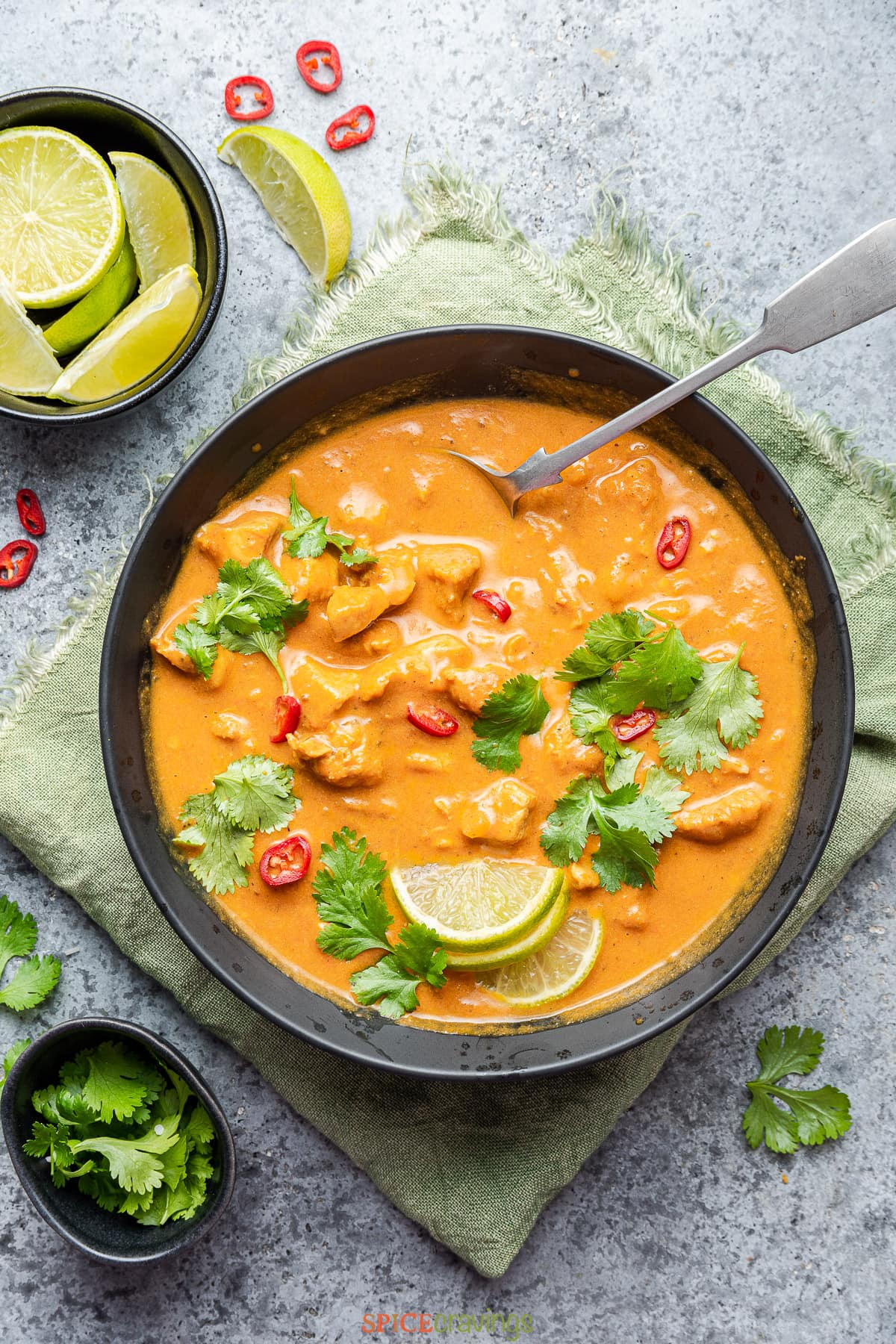
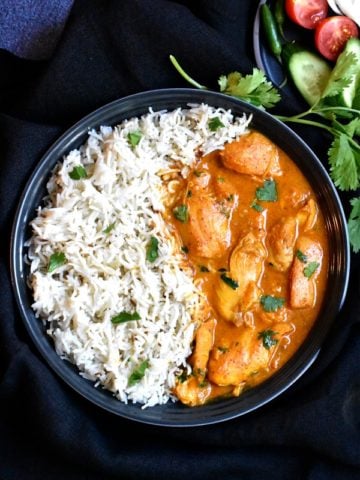
This Instant Pot Chicken Coconut Curry is a fragrantly spiced and lusciously creamy chicken curry recipe that's completely dairy-free. It's an easy and delicious curry ready in 30 minutes in the Instant Pot. Serve it over steamed Basmati rice, Jasmine rice, or opt for a low-carb version with cilantro-lime cauliflower rice.
Want to save this recipe?
This coconut curry chicken recipe is one of those easy weeknight dinners that I can whip up in 30 minutes, utilizing common pantry and fridge staples.
Classic and timeless, with plenty of variations to add your spin, this is a beautifully golden chicken curry that's naturally dairy-free, gluten-free, and low-carb. I hope your family enjoys it as much as mine does. Let's get started!
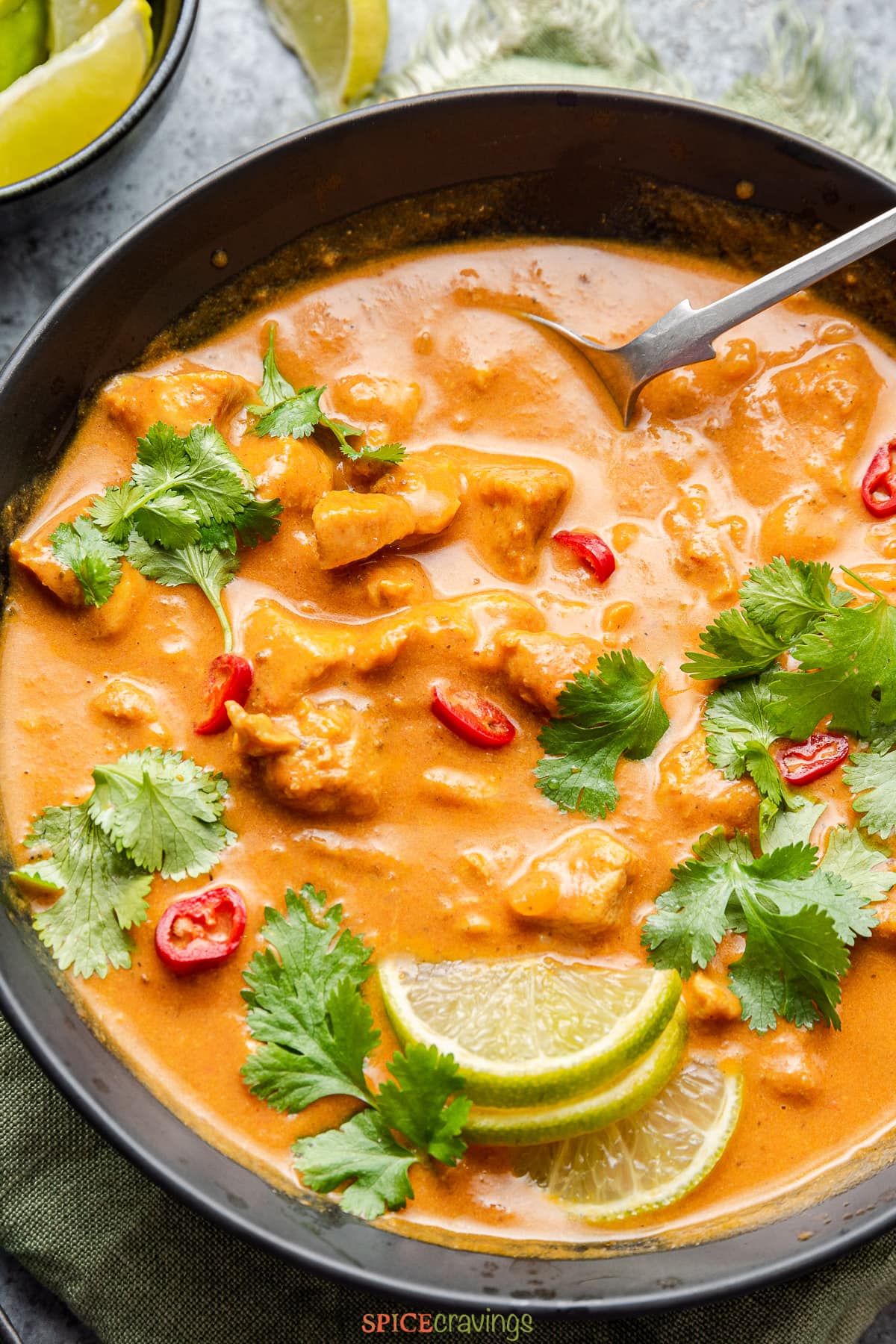
What does coconut curry taste like? Coconut chicken curry is a rich, creamy, and slightly sweet dish, with hints of warm spices, thanks to the curry powder. The flavor is enhanced with the addition of coconut milk.
Jump to:
Why We Love This Recipe
- 30-minute meal. I make rice while the curry cooks in the pressure cooker.
- Easy to customize - add frozen veggies and make it a complete meal.
- Makes a tasty low-carb meal when combined with cauliflower rice.
What is Curry?
Curry is a spiced dish with a flavorful sauce, made with a mix of onions, garlic, ginger, and warm spices. It's a cozy, saucy meal that varies by region and ingredients.
You might like this detailed article: What is Curry?
Ingredients - Notes & Substitutions
Chicken curry with coconut milk will become your new favorite dish to make at home, thanks to its incredible use of pantry staples. Here's a glance at what we need:
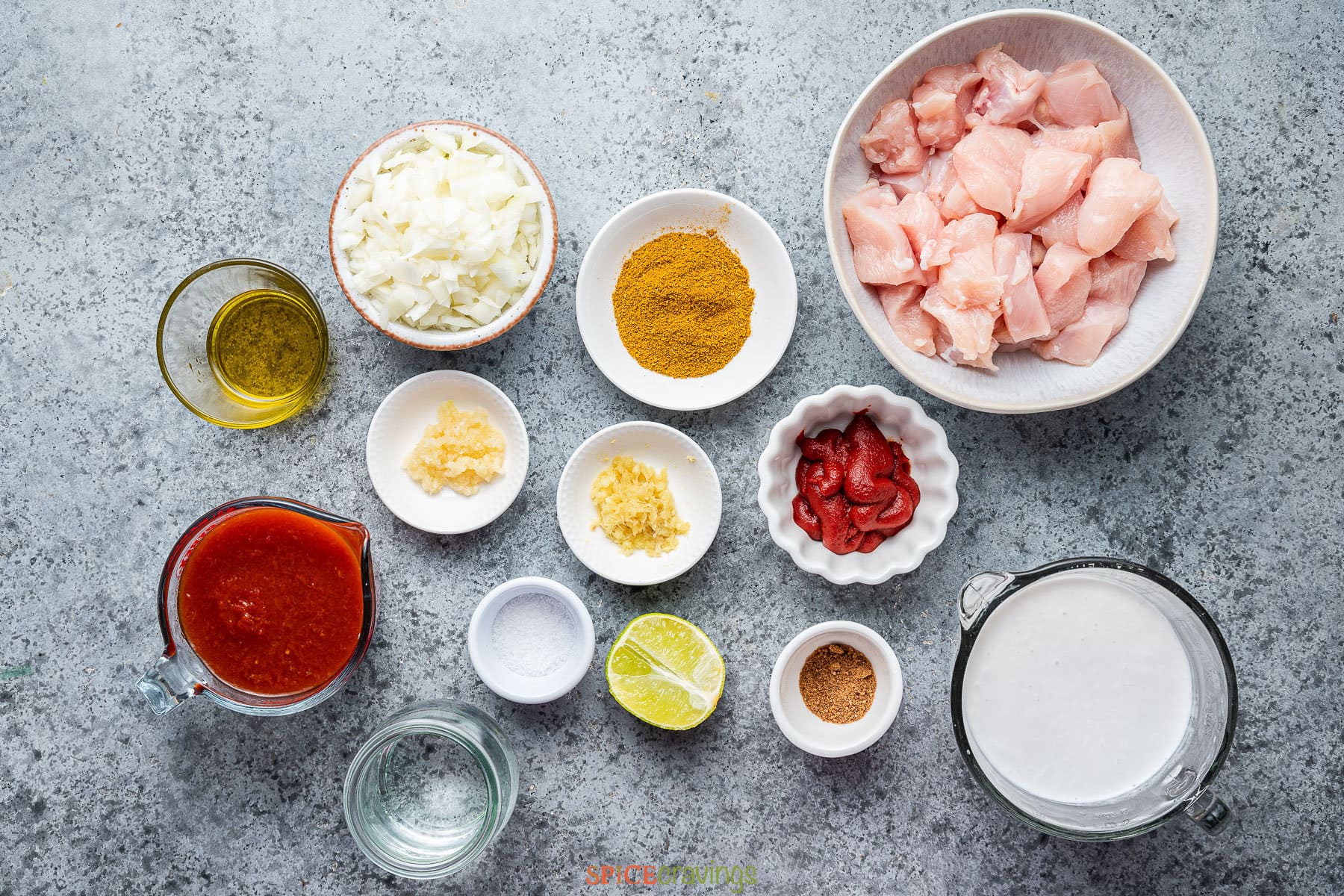
- Olive Oil: to add richness and body. Coconut oil or ghee will also work.
- Aromatics, including a savory base of onions, ginger, and garlic, deepen the flavor. I like to use ginger and garlic paste to save some time on prep work in the kitchen.
- Chicken: Chicken thighs will create a richer, more flavorful curry compared to chicken breasts. Use whichever you prefer; make sure to cut it into bite-sized pieces.
- Curry Powder: Store-bought curry powder, either mild or hot, adds aroma, spice, and heat. If you don't have it on hand, refer to the notes for a homemade recipe.
- Tomato Puree: One cup of canned tomato puree or ½ cup of canned diced tomatoes will both work. If you prefer to use fresh tomatoes, puree 2 Roma tomatoes, including the seeds.
- Tomato Paste: for richness, tang, and deep red color.
- Water: Balances the sauce and helps to deglaze the pot.
- Coconut Milk: One whole can of full-fat coconut milk adds body, richness, and that iconic creamy consistency. Shake the can before opening to ensure the fat is evenly mixed with the milk.
- Coconut Palm Sugar: optional, but a slight touch of sugar adds sweetness and balances the bitter notes of the curry powder. Honey can also be used.
- Lime Juice: for brightness and acidity.
- Garnish: Cilantro or parsley are both excellent finishing touches. Use whichever herb you prefer.
Scroll to the recipe card for a detailed list of ingredients and quantities.
How to Make Coconut Curry Chicken in Instant Pot
Here are the step-by-step instructions and photos on how to make this 30-minute coconut curry with chicken in the Instant Pot:
- Saute aromatics: Turn on the Instant Pot on Saute mode. When hot, add oil and chopped onions. Sauté onions for 3 minutes, until they soften and start to turn brown. Stir in the ginger and garlic paste, and sauté for 30 seconds (Pic 1).
- Step 2. Saute chicken: Add the chicken pieces along with salt and curry powder. Stir and cook the chicken for 3-4 minutes (Pic 2).
- Step 3. Add tomato: Now add tomato puree and tomato paste, and cook for an additional minute. Turn off the heat (Pic 3).
- Step 4. Deglaze the pot: Add water and use it to scrape off the brown bits stuck at the bottom (Pic 4). This prevents the 'burn' error in the Instant Pot, so don't skip this step.
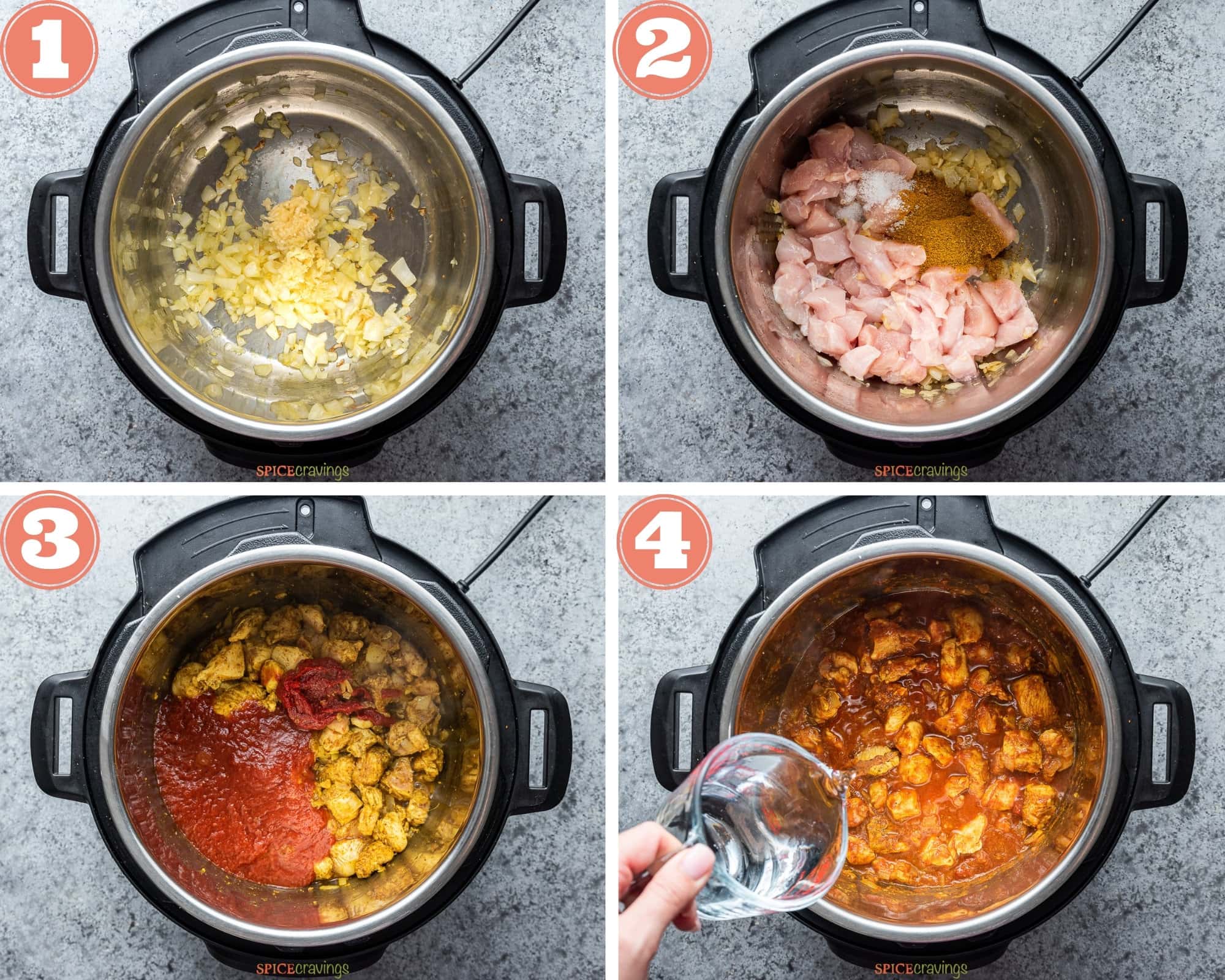
- Add coconut milk: Stir in the coconut milk (Pic 5). Close the lid and set the vent to the sealing position.
- Pressure cook: Cook the chicken on manual/pressure cook for 5 minutes. Adjust the default 'high pressure' setting to 'low pressure'. When the cooking is done, wait 5 minutes, then manually release pressure by moving the pressure valve to 'venting'. Open the lid after the pin drops. Garnish with cilantro (or parsley) and serve. (Pic 6).
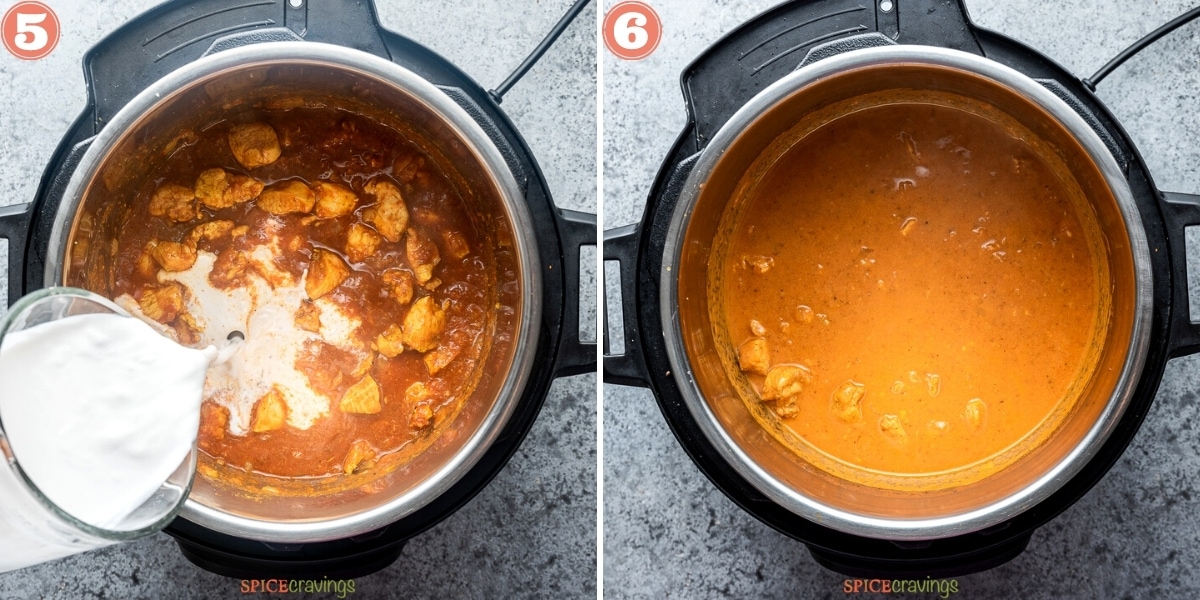
How to thicken the curry: If you would like to thicken the curry, simmer it on "saute" for 2 to 3 minutes. When it thickens to your liking, stir in the sugar and fresh lime juice.
Serving Suggestions for Chicken Coconut Curry
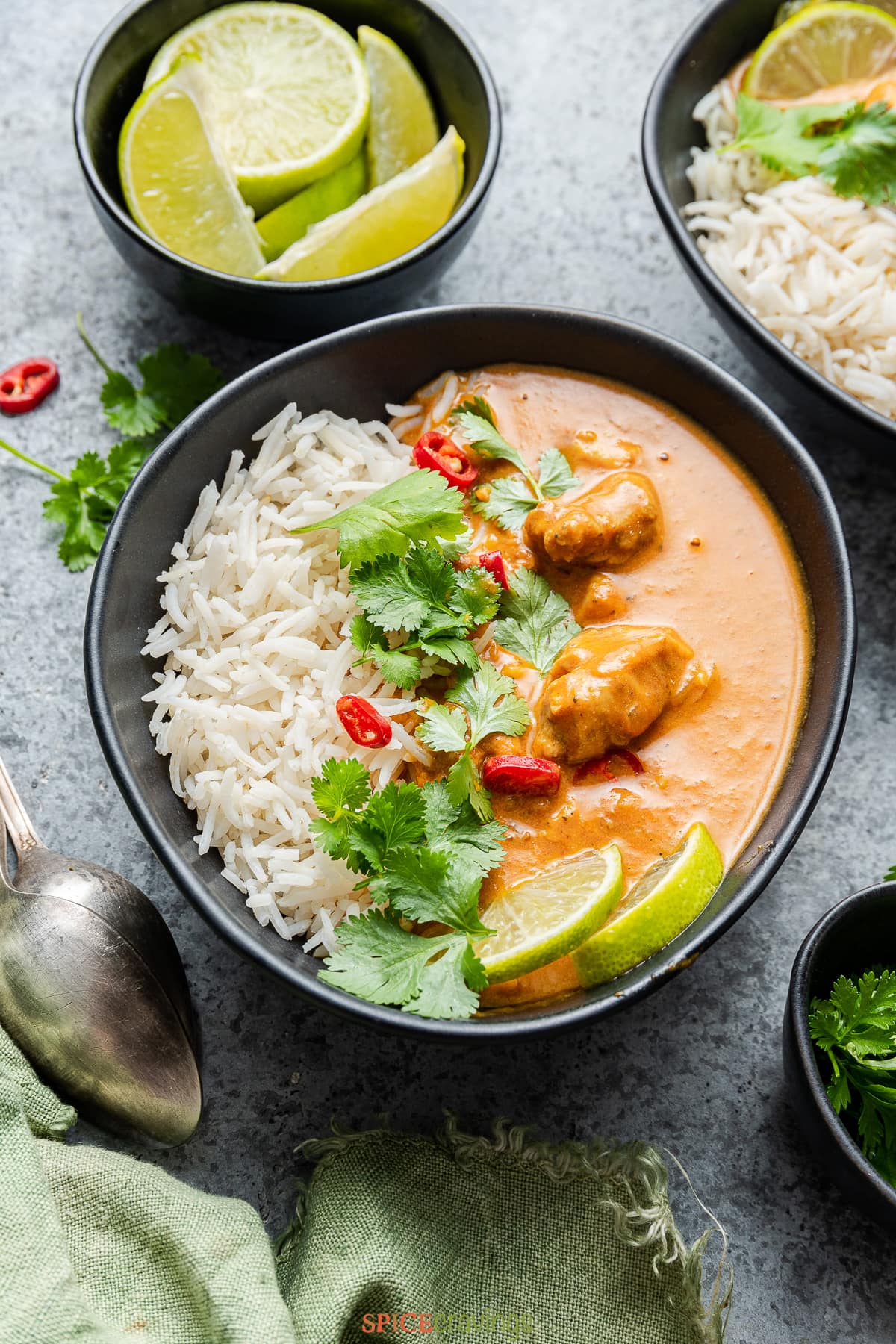
For the most enjoyable taste, finish this curry with a squeeze of fresh lime juice and garnish with chopped cilantro, or herb of choice.
To enjoy a complete meal, serve this chicken coconut curry with:
- Rice: Serve the classic way over steamed basmati rice, jasmine rice, or a nuttier brown rice.
- Low Carb Pairing: Keep it light and serve over cilantro lime cauliflower rice for a low-carb meal.
- Vegetable Side Dish: Serve it with a side of vegetables, like roasted broccoli or garlic green beans.
How to Store
Leftover coconut curry chicken will keep for up to 4 days in an airtight container in the fridge.
Reheating Instructions: Transfer the coconut curry sauce and chicken to an oven-safe dish. Heat in a preheated oven at 250F for 10-15 minutes.
Or, reheat over medium on the stove or in 30-second increments in the microwave.
Try a Variation
Don't have the right ingredients on hand or looking to add a personal touch? No problem! Here are some of my favorite variations:
- Thai Red Curry Paste: Skip the tomato paste and curry powder. Add 2-3 tablespoons red curry paste instead.
- Veggies: Stir in your favorite vegetables, such as zucchini, carrots, potatoes, and sweet potatoes. Add 1-2 teaspoons of curry powder.
- Add Shrimp: Use 1-1.5 pounds of frozen shrimp instead of the chicken. Reduce the pressure cooking time to 3 minutes and set the pressure to low.
Recipe Tips & Notes
- Coconut Milk: For a creamy texture and flavor, use full-fat coconut milk. If using a low-fat version, please note that the curry will be runnier and less creamy.
- Shake the can: Before opening, shake the coconut milk can to recombine the separated fat with the milk.
- Curry Powder Substitute: To replace curry powder, mix 1 tablespoon ground coriander, 1½ teaspoons ground cumin, ½ teaspoon turmeric, ½ teaspoon ground cardamom, ½ teaspoon ground black pepper, and ½ teaspoon cayenne pepper.
- Low Pressure: Cook on low pressure to prevent the coconut milk from curdling. If it does curdle, it's not spoiled; the fat separates from the milk. To fix this, turn on the sauté and whisk it back together until smooth.
- Prevent 'Burn' Message: To prevent the unwanted 'burn' message, ensure that you scrape the bottom of the pot after adding the water.
Frequently Asked Questions
It's best to add coconut milk to a curry near the end, after all the ingredients have been added, and just before simmering.
This version of coconut curry sauce is made with a mix of aromatics (onions, ginger, garlic), curry powder, tomatoes and coconut milk. The coconut palm sugar, lime juice and cilantro give it that final finishing flourish.
Although coconut cream (also known as cream of coconut) and coconut milk are both derived from coconuts, coconut cream contains more fat. It is richer and creamier in taste and texture. Using Coconut cream results in a rich, creamy curry, whereas coconut milk produces a thinner, less creamy sauce.
Achieving authentic flavor in this curry is all about building the layers of flavor, from the sautéed onions, garlic, and ginger to the warm spices like garam masala, and coconut milk ties it all together. It's an easy weeknight meal that still hits all those classic, comforting notes you'd expect from a homestyle curry.
In this curry, the coconut milk provides a natural sweetness. We also add a touch of sweetness with palm sugar, also known as coconut sugar. Some alternatives include brown sugar, regular sugar, and honey.
Yep! Always a good idea. The creamy part often separates and floats to the top, so give the can a good shake or stir it well after opening to make sure it's smooth and evenly mixed before adding it to the pot.
More Instant Pot Chicken Curries
These are all part of the Chicken Curry Recipes series:

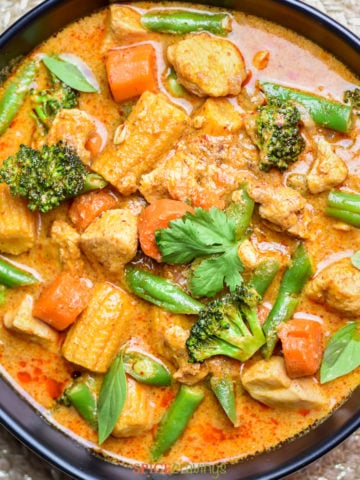
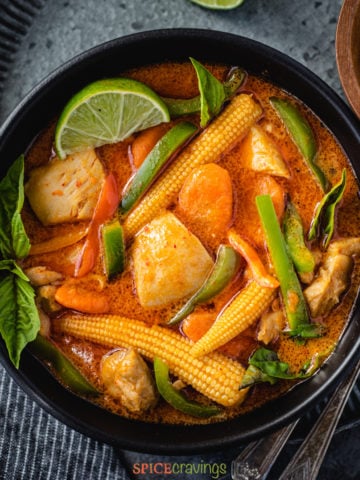
📖 Recipe
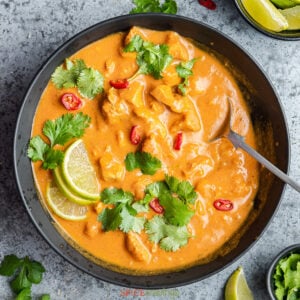
Instant Pot Coconut Chicken Curry
Want to save this recipe?
Equipment
Ingredients
- 1 tablespoon olive oil
- 1 cup onion (yellow or white) finely chopped (1 small)
- 2 teaspoons ginger paste ½-inch piece finely grated or ground
- 2 teaspoons minced garlic 2 cloves
- 2 pounds skinless and boneless chicken thighs (or breast) cut into bite-size pieces
- ½ teaspoon salt or to taste adjust to taste after cooking
- 2 tablespoons curry powder (mild or hot) see 'Recipe Notes' for substitutions
- 1 cup tomato puree or puree 2 Roma tomatoes or ½-can diced tomatoes
- 2 tablespoons tomato paste
- ½ cup water
- 14 ounces coconut milk 1 can
- 1 teaspoon coconut palm sugar (or honey) adjust to taste or skip
- 1 teaspoon lime juice
- 2 tablespoons chopped cilantro or parsley
Instructions
- Saute aromatics: Turn on the Instant Pot on Saute mode. When hot, add oil and chopped onions. Saute onions for 3 minutes until they soften and start turning brown. Stir in ginger and garlic paste and saute for 30 seconds.
- Saute chicken: Add the chicken pieces along with salt and curry powder. Stir and cook the chicken for 3-4 minutes.
- Add tomato: Now add tomato puree and tomato paste and cook for another minute. Turn off the heat.
- Deglaze the pot: Add water and use it to scrape off the brown bits stuck at the bottom. This prevents the 'burn' error in the Instant pot, so don't skip this step.
- Add coconut milk: Stir in the coconut milk. Close the lid and set the vent to sealing position.
- Pressure cook: Cook the chicken on manual / pressure cook for 5 minutes on low pressure. When the cooking is done, wait for 5 minutes, then release the pressure manually by following your cooker's quick-release instructions. Once the pin drops, open the lid.
- Finish the curry: If at this point the curry looks too runny, you can reduce the liquid by cooking it for 2-3 minutes on saute mode. If it looks good, stir in the sugar and fresh lime juice
- Garnish and serve: Garnish with cilantro (or parsley) and serve over rice.
Notes
- Coconut Milk: For a creamy texture and flavor, use full-fat coconut milk. If using low-fat version, please keep in mind that the curry will be runny and less creamy.
- Curry Powder Substitute: To replace curry powder, mix together 1 tablespoon ground coriander, 1½ teaspoons ground cumin, ½ teaspoon turmeric, ½ teaspoon ground cardamom, ½ teaspoon ground black pepper, and ½ teaspoon cayenne pepper.
- Low Pressure: Cook on low pressure to prevent coconut milk from curdling. If it does curdle, it's not spoiled, the fat simply separated from the milk. To fix this, turn on saute and whisk it back together until smooth.
- Prevent 'Burn' Message: To prevent the unwanted 'burn' message, make sure to scrape the bottom of the pot after adding the water.


Jill says
I make this recipe every week, it's so good Aneesha! Easy and delicious. I add frozen veggies to it and have it with your jasmine rice- perfect. Thank you.
Aneesha Gupta says
You're welcome Jill- I'm so glad you make it on rotation! It's a favorite in my home too 🙂 I highly recommend trying the Fish coconut curry if you like these flavors!